
Search Florida Criminal History Records
Criminal history records in Florida are maintained by the Department of Law Enforcement. The FDLE serves as the central repository for criminal history information. You can access these Florida public records through the online portal. The criminal records system contains over six million subject records. Citizens across Florida can search for criminal history records from any location with internet access. These records help verify backgrounds and provide personal criminal record information.
Florida Criminal History Quick Facts
What Are Florida Criminal History Records
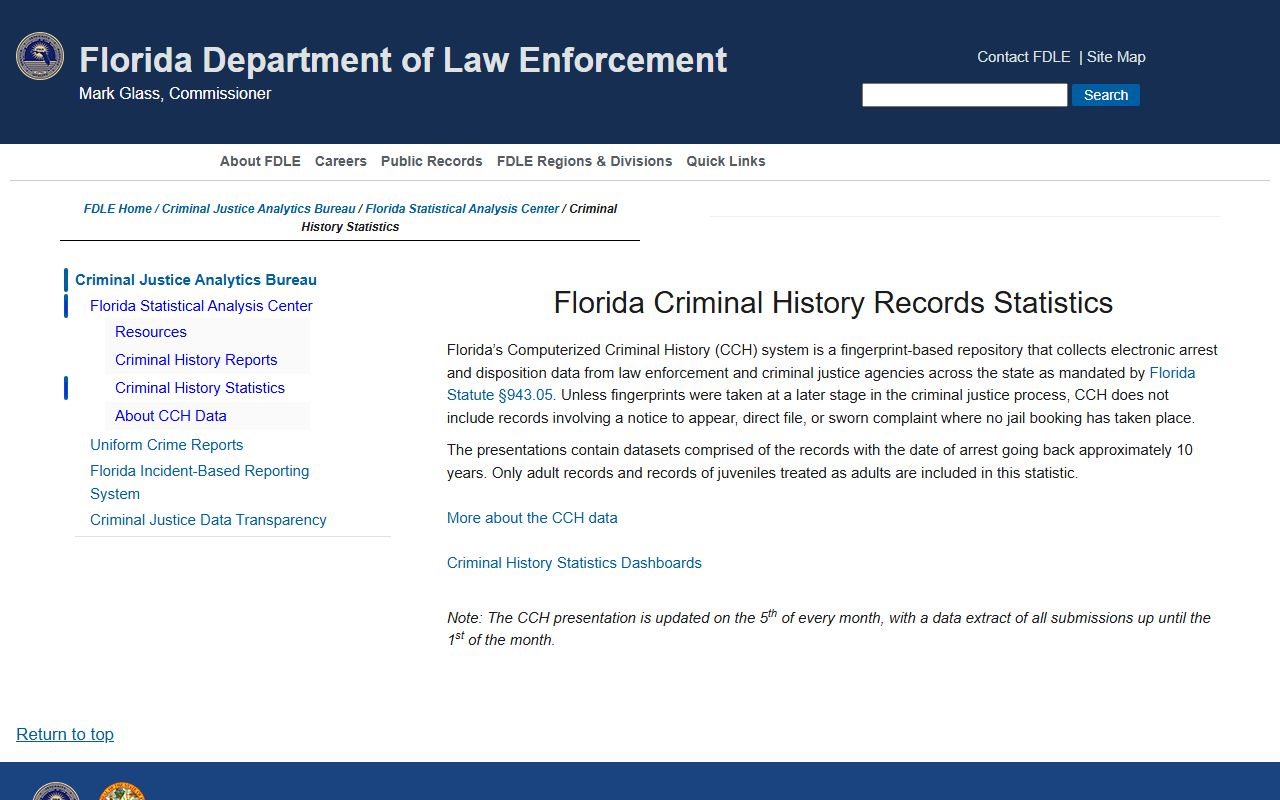
Criminal history records contain official documentation of arrests and dispositions in Florida. The Florida Department of Law Enforcement maintains these criminal history records. The Computerized Criminal History system stores criminal record data. This system collects criminal history information from law enforcement agencies across Florida. State attorneys and courts also contribute to the criminal records database.
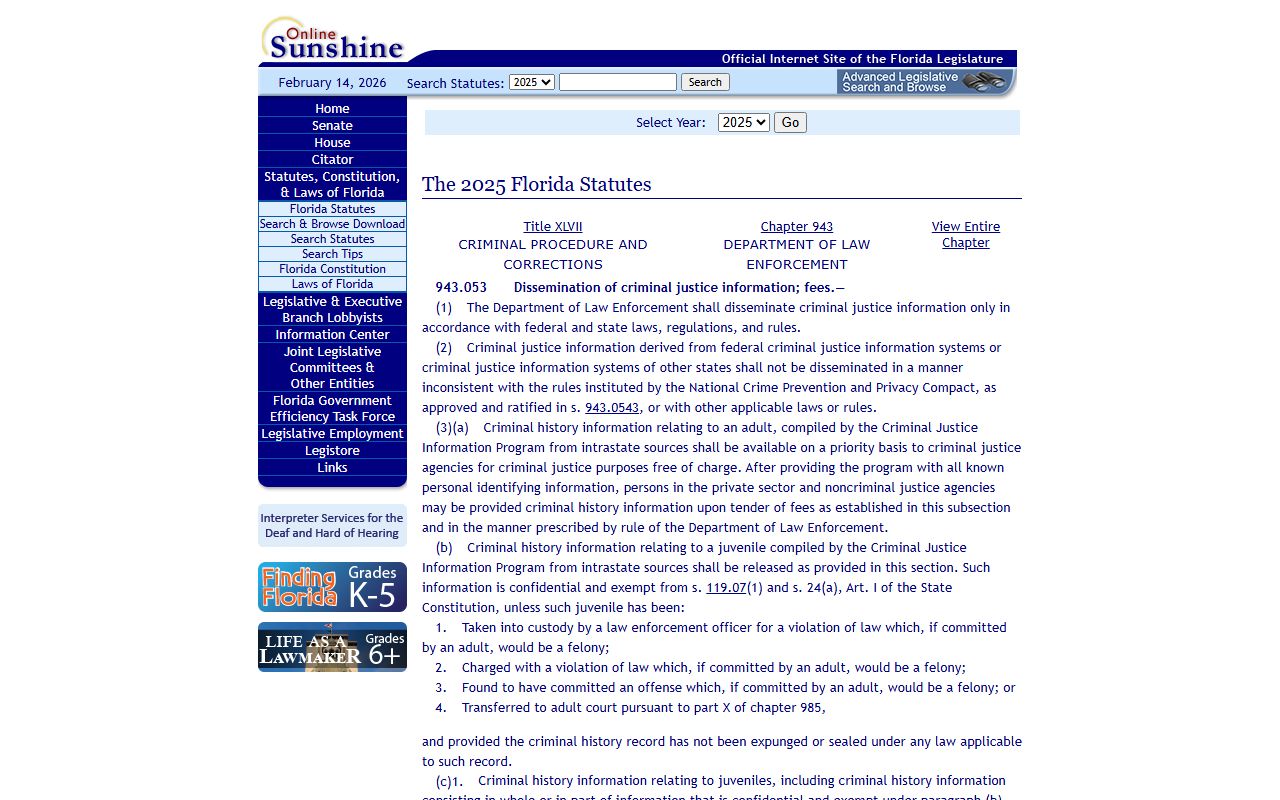
The Division of Criminal Justice Information Services manages the criminal records system in Florida. This division operates under Florida Statute 943.053. The statute establishes the framework for criminal history records. It defines who can access these criminal records. The law ensures public access to criminal history. It also protects privacy rights for criminal records.
Criminal history records include fingerprint-based arrest information from across Florida. Each criminal record contains details about the subject. The criminal history data comes from police departments. Sheriff's offices contribute criminal records too. State agencies add information to criminal records.
How to Search Florida Criminal Records
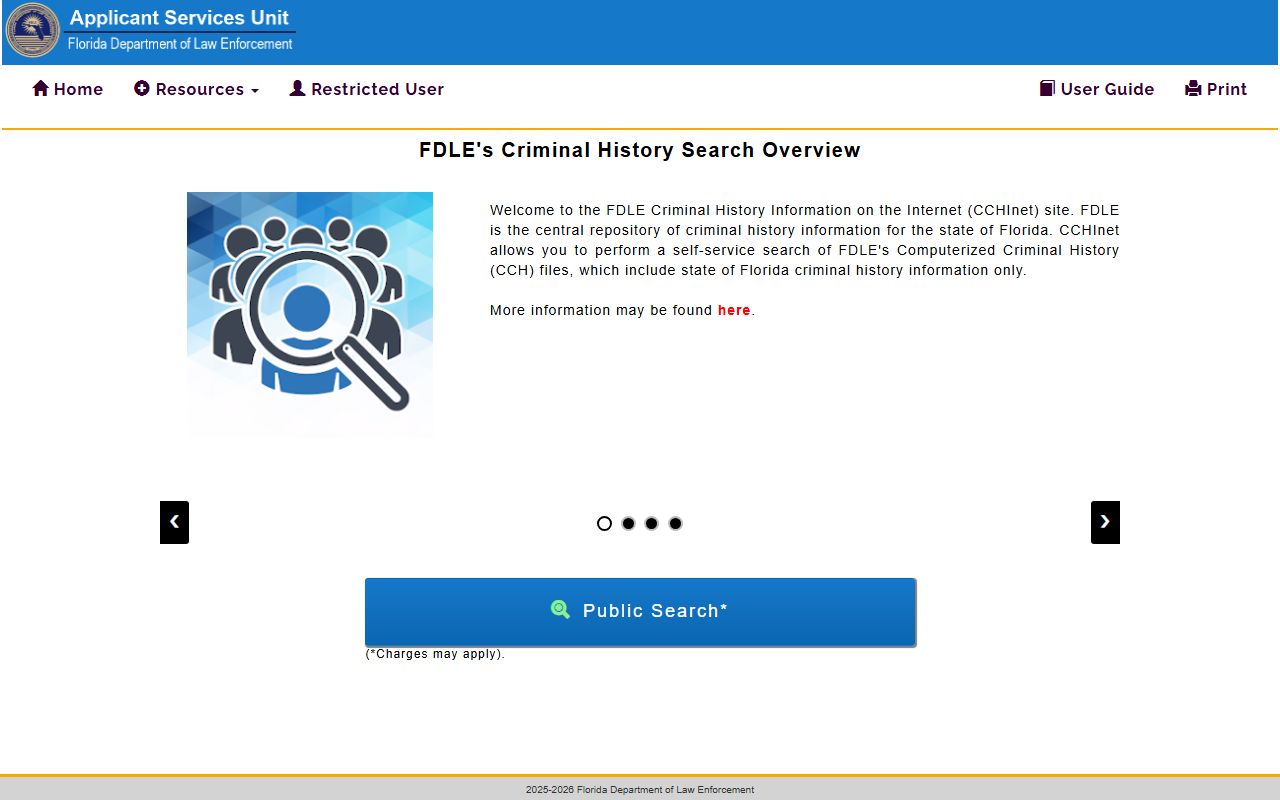
Searching criminal records starts with the FDLE online portal. The Department of Law Enforcement provides access to criminal history records. You can conduct criminal record searches from any computer. The process requires basic demographic information. Criminal history results are available through two search methods.
Visit the FDLE CCHInet portal to begin your criminal history search. The system guides you through the criminal record search process. You will need to provide identifying information. This includes full name and date of birth for criminal records.
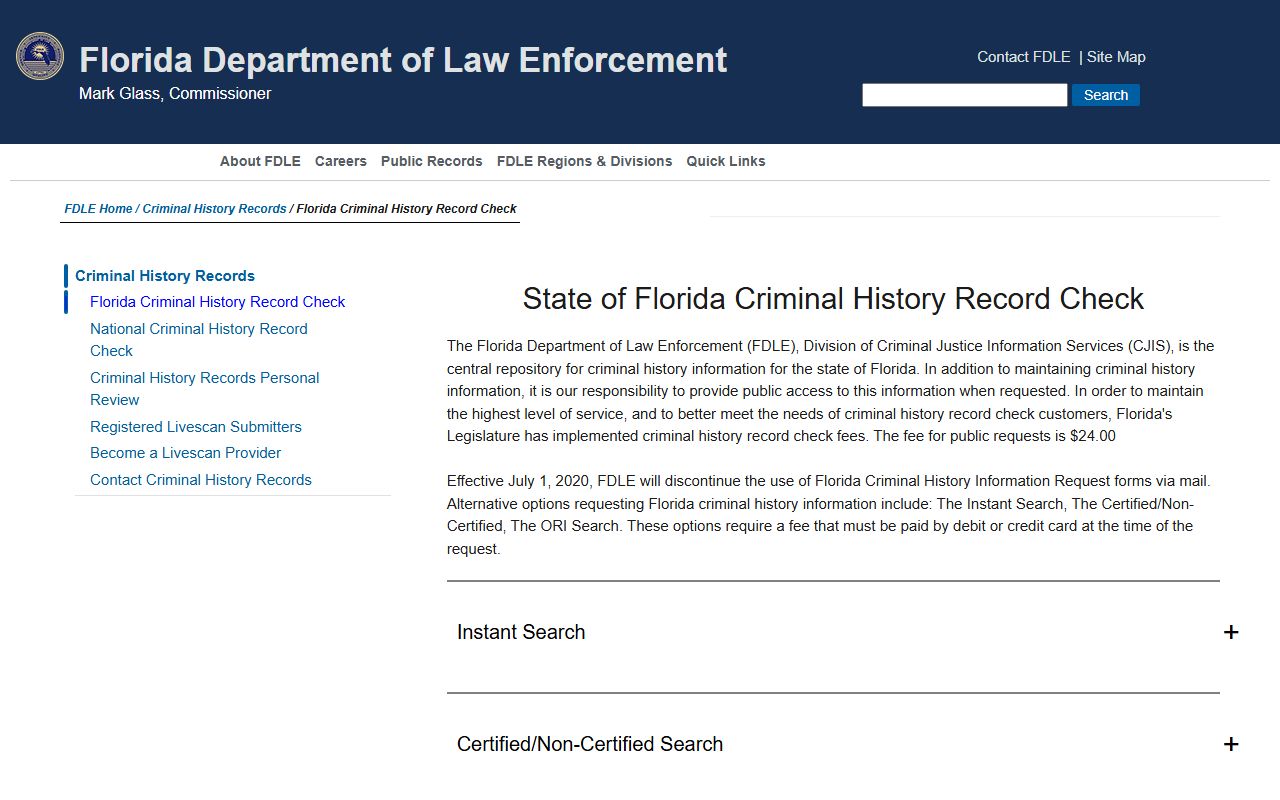
The search process involves entering subject information into the online form. You must specify whether you want instant criminal history results or certified copies. Payment is required before the criminal history search begins. Florida charges $24.00 per criminal record search plus a credit card fee.
Visit the official FDLE search page to learn more about criminal records. The website provides detailed instructions for criminal history searches in Florida.
Florida Criminal History Search Options
Florida offers two main ways to search criminal history records. Each criminal record search method serves different needs. Understanding these options helps with criminal history.
Instant Search: This option provides immediate criminal history results. You conduct the criminal record search yourself. Results appear on your screen instantly. You can print the criminal records. You can also email your criminal history results.
Certified/Non-Certified Search: This option involves FDLE staff conducting the criminal history search. You submit demographic information for the criminal record search. Non-certified criminal history results take about five business days. Certified criminal records require six to seven business days.
Note: FDLE cannot provide ORI numbers for criminal history searches.
Understanding Your Florida Criminal History Results
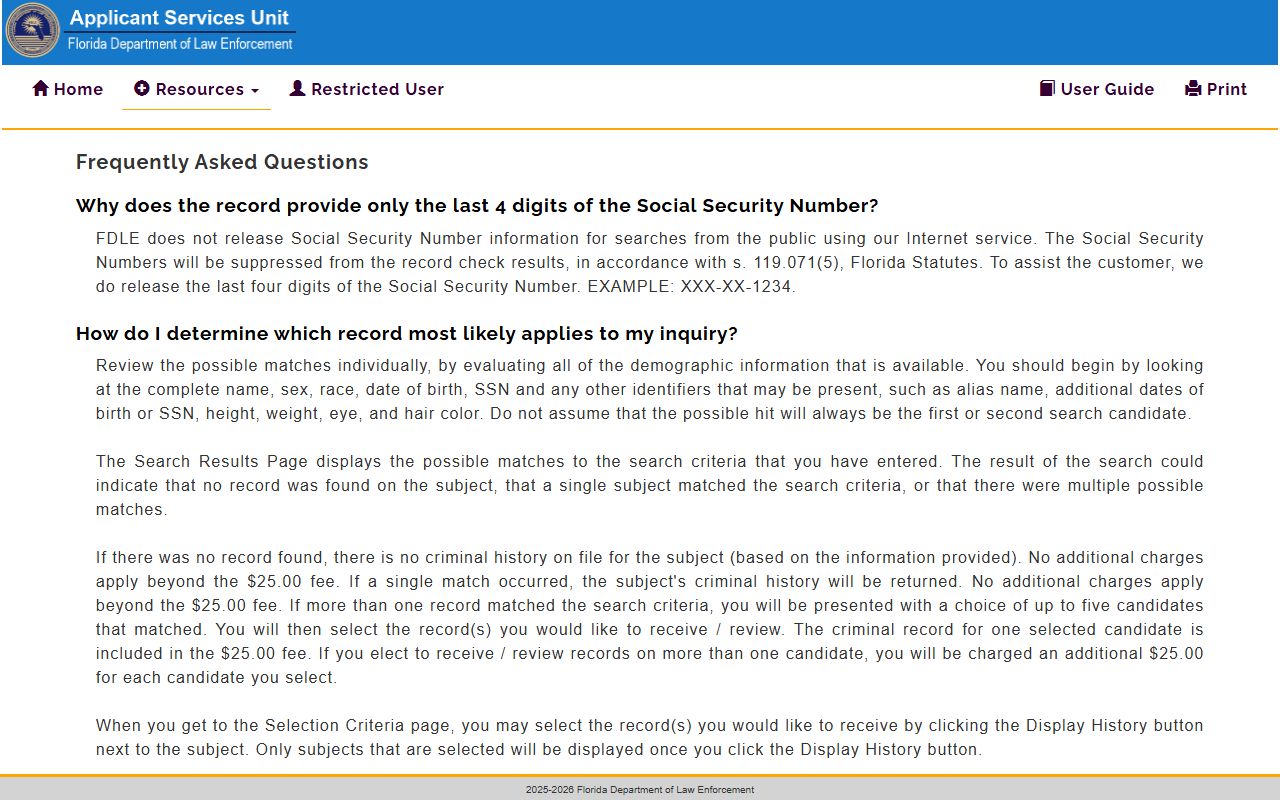
Criminal history search results fall into three categories. The system may find no matching criminal records. It may identify a single criminal history subject. Or it may return multiple criminal record matches.
When no criminal record is found, you still pay. The $25.00 charge covers the criminal history search process. This applies to both types of criminal record searches. The fee structure remains the same.
For single criminal history matches, you receive complete records. The criminal record includes all arrests. It shows all dispositions too in criminal history. Florida suppresses full Social Security Numbers in criminal records. Only the last four digits appear in criminal history results. This protection follows Florida Statute 119.071(5).
Multiple criminal history matches require evaluation. Compare all demographic information for criminal records. Consider full name and date of birth. Physical descriptors help identify criminal history subjects. Each additional criminal record costs $25.00.
Juvenile criminal records have special rules. Unsealed juvenile criminal history records have limited release.
Florida Criminal History Laws and Statutes
Florida law establishes the criminal history record framework. Several key statutes govern criminal records. They control how criminal history records are collected. They also guide criminal record sharing practices.
Florida Statute 943.053 creates the Criminal Justice Information Program. This statute mandates criminal history data collection. It authorizes sharing criminal records with justice agencies. The law permits public access to criminal history.
Florida Statute 943.0585 addresses criminal record sealing. This law allows hiding criminal history records. Sealing restricts public access to criminal records.
Florida Statute 943.059 governs criminal record expungement. Expungement goes further than sealing for criminal history. It requires destruction of criminal history records.
Florida Statute 119.071(5) protects Social Security Numbers on criminal records. This prevents full SSN disclosure in criminal history records.
Florida Criminal History Fees and Processing Times
Florida charges consistent fees for criminal history searches. Understanding criminal record costs helps planning. The fee structure applies to all criminal history methods.
Each criminal history search costs $24.00. A credit card fee brings the total to $25.00. This applies to every criminal record subject. Multiple criminal history selections mean multiple charges. The fee pays for the criminal record search. Results do not affect criminal history costs.
Processing times vary by criminal history type. Instant searches deliver criminal record results immediately. You see criminal history information within seconds. Non-certified criminal history searches take five business days. Certified criminal record searches require six to seven days.
Note: Mail-in forms were discontinued July 1, 2020.
How to Get Copies of Florida Criminal History Records
Obtaining copies requires using the FDLE system. The process differs by criminal record copy type. Certified and non-certified criminal history copies serve different purposes.
For instant results, print from your browser. The system allows emailing criminal records. These criminal history copies work for reference. They lack official criminal record certification.
Certified copies require staff assistance. Submit your criminal record request through the portal. FDLE personnel conduct the criminal history search. You receive certified criminal records by mail. This process takes six to seven days. Certified copies carry legal weight for criminal history.
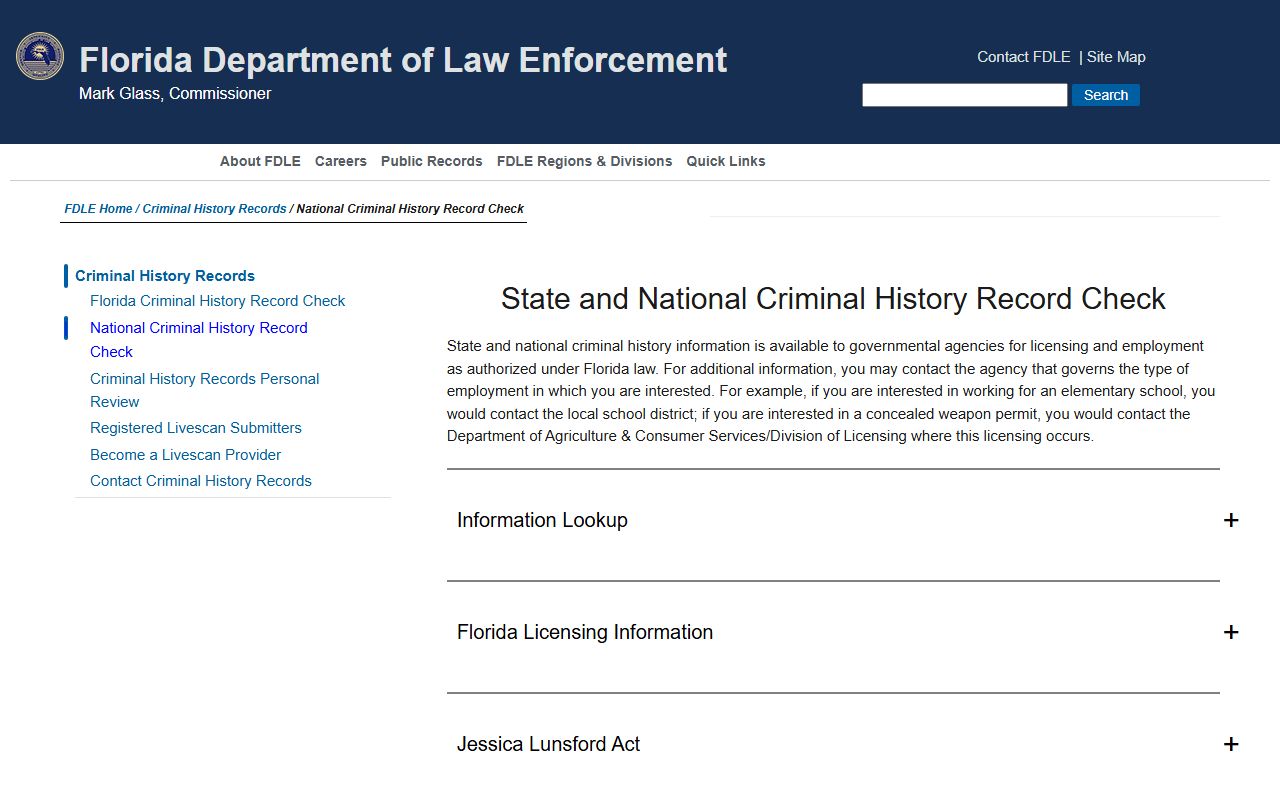
Personal review copies follow a separate process. Visit the FDLE personal review page for instructions. This option allows reviewing your own criminal history records.
Sealing and Expunging Florida Criminal History Records
Florida law provides options for limiting access. Sealing and expungement offer criminal record privacy protection. These criminal history processes have specific requirements.
Record sealing hides criminal history from view. Sealed criminal records remain in the system. Law enforcement can still access criminal history. The public cannot view these criminal records.
Expungement requires criminal record destruction. Expunged criminal records are physically destroyed. FDLE keeps only a confidential criminal record. This option has stricter requirements for criminal history.
Contact the FDLE Expungement Section for help. Call (850) 410-7870 for criminal history questions. Email SEinfo@fdle.state.fl.us for criminal record inquiries.
Contact Information for FDLE Criminal History Services
The Florida Department of Law Enforcement provides multiple contacts. Different criminal history services have dedicated lines. Knowing the right contact saves time.
For background checks, call (850) 410-8161. This line connects to Applicant Services for criminal history. Email criminal record questions to ApplicantChecks@fdle.state.fl.us. Staff are available Monday through Friday.
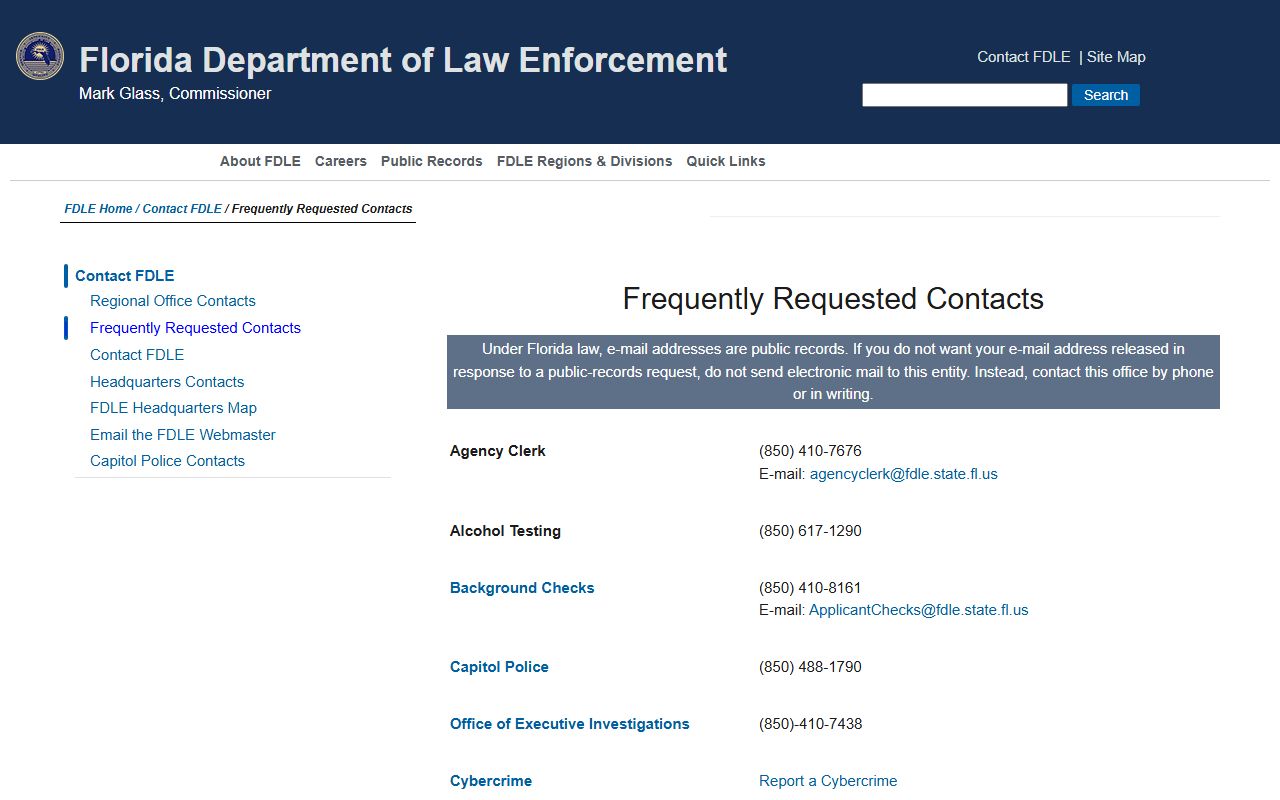
Expungement inquiries use a separate contact. Call (850) 410-7870 for criminal history sealing questions. Email SEinfo@fdle.state.fl.us for criminal record assistance.
General information questions go to (850) 410-7000. Public criminal records requests contact (850) 410-7676. Email publicrecords@fdle.state.fl.us for requests. Visit the FDLE contacts page for information.
Visit the FDLE homepage for resources. The website offers criminal history forms and guides.
Browse Florida Criminal History Records by County
Each county contributes arrest and court data. Local law enforcement agencies provide criminal record information. Select a county below for criminal history resources.
Criminal History Records in Major Florida Cities
Major cities maintain law enforcement records. City police departments provide arrest data. This becomes part of the CCH criminal history database.