
Criminal Records in Flagler County
Flagler County criminal history records are maintained as public documents by the Clerk of Courts in Bunnell, providing comprehensive access to arrest records, court proceedings, and case dispositions that span many decades of the county's legal history. As a member of Florida's 7th Judicial Circuit, Flagler County adheres to the state's open records principles while maintaining the infrastructure necessary to preserve and provide access to these important historical documents. Residents and researchers can access these records through multiple channels including in-person visits to the clerk's office, online database searches, and formal written requests, with staff available to assist those unfamiliar with the search process.
Flagler County Quick Facts
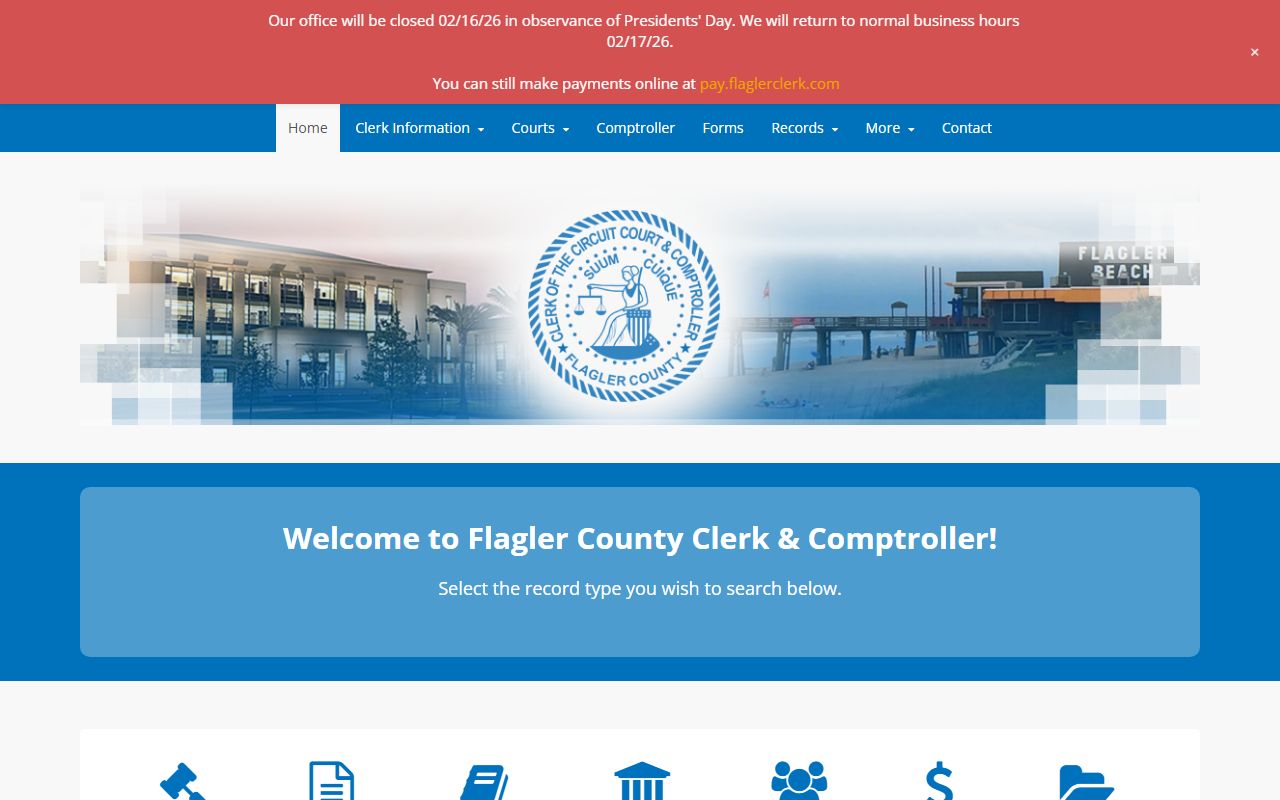
Flagler County Clerk of Courts
The Clerk of Courts in Bunnell serves as the official custodian of all criminal court records for Flagler County, managing the entire lifecycle of case documentation from initial filing through final disposition. This office receives and processes new criminal cases as they are filed by law enforcement and prosecutors, maintains secure storage facilities for both active and archived court documents, and fulfills copy requests from the public, attorneys, and other interested parties. The experienced staff can assist researchers in locating specific cases using various search criteria including defendant names, case numbers, or date ranges, and they provide guidance on how to interpret the documents once retrieved.
Criminal records maintained by the Flagler County Clerk encompass a broad spectrum of documentation including arrest affidavits, formal charging documents issued by the state attorney, court orders entered by judges, negotiated plea agreements, and detailed sentencing papers that specify penalties imposed. The final judgment in each case represents a permanent record of the court's decision and any associated sanctions. While Florida's public records laws ensure broad access to these documents, certain limitations apply to protect sensitive information. Juvenile records are routinely sealed to prevent youthful mistakes from following individuals into adulthood, and some adult records may have redacted portions to protect victim identities or confidential personal information.
| Office | Flagler County Clerk of Courts |
|---|---|
| Address | 1769 E Moody Blvd, Bldg 1, Bunnell, FL 32110 |
| Phone | (386) 313-4400 |
| Hours | Monday through Friday, 8:00 AM to 5:00 PM |
| Website | flaglerclerk.com |
Criminal Records Available in Flagler County
The Clerk of Courts maintains a diverse array of criminal record types that serve different functions within the Flagler County justice system. Arrest records provide the initial documentation of custody, noting the date, location, and circumstances of detention along with the specific charges filed by arresting officers and the identity of the agency making the arrest. These records form the foundation of subsequent court proceedings and are generally available without restriction to the public. Court records then build upon this foundation by documenting every procedural step in the case, from the initial charging document through all motions, hearings, and the final disposition. These comprehensive files reveal the full narrative of each case including any plea negotiations, trial proceedings, and the specific sanctions imposed such as fines, incarceration periods, and probation conditions.
Types of criminal records in Flagler County include:
- Arrest reports and booking records
- Charging documents and indictments
- Court motions and hearing records
- Plea agreements and trial transcripts
- Sentencing orders and judgments
- Probation and parole records
While the presumption in Florida favors public access to government records, several categories of criminal information remain restricted. Cases involving juvenile defendants are typically sealed automatically to protect the privacy of young people and encourage rehabilitation without the burden of a permanent public record. Adult defendants may petition for expungement in certain circumstances, which results in the destruction of records for qualifying offenses. Information identifying crime victims is routinely protected from disclosure to prevent harassment and ensure victim safety. The clerk's office can clarify which records are fully accessible, which require court orders to view, and which are permanently exempt from public disclosure.
How to Search Flagler County Criminal Records
Multiple search methods are available for accessing criminal records in Flagler County, each offering distinct advantages depending on your research needs and timeline. Online searches provide immediate access to recent records through the clerk's digital database, allowing you to search from any location without traveling to the courthouse. This method works well for verifying recent case activity or obtaining basic case information quickly. In-person visits offer the advantage of accessing complete physical files including older records that may predate electronic filing systems, and allow you to review all documents in a case file rather than just the electronic summaries available online.
For those choosing to visit the Clerk of Courts office in Bunnell, the process requires bringing valid photo identification and checking in at the public records counter. Staff members can assist with using the public access terminals or retrieve files from storage upon request. Cases can be located by defendant name, case number, or filing date range, and copies are available for a nominal per-page fee. The clerk's website at flaglerclerk.com provides an alternative for those unable to visit in person, offering case search functionality that may require account registration for full access. Some search features are provided without charge, while certified copies and detailed reports incur modest fees.
For comprehensive statewide coverage beyond Flagler County, the Florida Department of Law Enforcement operates a centralized background check system covering all 67 counties. This service, accessible at fdle.state.fl.us, charges a fee per search and is particularly valuable for employers, landlords, and others who need to verify criminal history across multiple jurisdictions rather than focusing on a single county. The FDLE database aggregates information from local clerks and law enforcement agencies to provide a unified view of an individual's Florida criminal history.
Background Checks in Flagler County
Background checks in Flagler County serve various purposes from employment screening to tenant verification, and the scope of the search should match the intended use. A local background check limited to Flagler County records will reveal any criminal cases filed within this jurisdiction but will miss offenses prosecuted in other Florida counties or in other states. For positions requiring comprehensive vetting, such as those involving vulnerable populations or financial responsibilities, a statewide check through the FDLE or a national check through the FBI provides more complete coverage and reduces the risk of missing relevant criminal history.
Requesting a local background check requires submitting the subject's full legal name to the Bunnell clerk's office along with any additional identifying information such as date of birth or social security number that can help distinguish between individuals with similar names. The clerk will search both electronic and physical archives for matching records and compile a report detailing any cases found, typically completing this process within a few business days. The fee structure varies based on the complexity of the search and whether certified copies of documents are required.
Florida Statute Chapter 943 establishes the legal framework for background checks in the state, specifying which occupations require mandatory screening and setting standards for how criminal history information can be used in employment decisions. Covered positions generally include those providing direct care to children, elderly individuals, or people with disabilities, as well as many licensed professions where integrity is essential. The law requires employers to follow specific procedures when making adverse decisions based on background check results and gives individuals rights to contest inaccurate information.
Fingerprint-based background checks offer enhanced accuracy by using biometric verification to confirm identity and eliminate confusion between individuals with similar names. The FDLE and FBI both provide fingerprint-based screening services that compare submitted prints against national databases, providing more thorough results than name-based searches alone. These services cost more than standard checks but are recommended for positions involving high security clearance or substantial trust.
Record Sealing and Expungement in Flagler County
Florida law recognizes that individuals who have made mistakes deserve opportunities to move forward without the permanent burden of a public criminal record, and provides mechanisms for sealing or expunging qualifying cases. The process begins at the Flagler County Clerk of Courts office in Bunnell, where petitioners can obtain the necessary forms and learn about eligibility requirements. Record sealing effectively removes the case from public view, meaning it will not appear in standard background checks conducted by employers or landlords, though certain government agencies retain access for specific purposes. Expungement goes further by ordering the physical destruction of records, leaving only a confidential copy with the FDLE.
Eligibility for sealing or expungement is strictly limited by statute and depends on factors including the nature of the offense, the disposition of the case, and the individual's overall criminal history. Serious crimes such as violent felonies, sexual offenses, and certain drug trafficking charges are generally ineligible regardless of how much time has passed. For qualifying offenses, applicants must have completed all sentence requirements including incarceration, probation, and payment of all fines and restitution. Most petitions also require a waiting period following case closure, typically one year, during which the individual must maintain a clean record.
The expungement process requires obtaining a Certificate of Eligibility from the FDLE before filing a petition with the Flagler County court. This certificate verifies that the applicant meets statutory requirements and has no disqualifying convictions in their background. Once issued, the certificate must accompany the petition filed with the court, and a judge will review the application to determine whether granting the relief serves the interests of justice. If approved, orders are sent to all agencies holding records directing them to seal or destroy the files as appropriate.
The clerk's office provides procedural guidance and forms but cannot offer legal advice about the likelihood of success or strategy for particular cases. Individuals with complex situations or questions about eligibility may benefit from consulting an attorney who specializes in post-conviction relief. Legal aid services are available for qualifying low-income residents, and the Florida Bar referral service can help connect individuals with appropriate counsel.
Florida Department of Law Enforcement Records
The FDLE maintains Florida's central repository for criminal history information, collecting data from law enforcement agencies and court clerks across all 67 counties including Flagler County. This statewide database serves as the primary resource for official background checks and contains comprehensive arrest and disposition records that follow individuals throughout their interactions with the criminal justice system. The information is continuously updated as new arrests occur and cases are resolved in courts across the state.
Individuals may request their own criminal history record from the FDLE through the Personal Review process, which requires submitting fingerprints to verify identity and paying the required fee. The FDLE will then provide a complete copy of the individual's Florida criminal history, allowing review for accuracy and the opportunity to challenge any errors. This service typically takes two to three weeks from submission to receipt of results.
For employment and licensing purposes, the FDLE offers online background checks through their secure portal at fdle.state.fl.us. This system allows authorized users to conduct name-based or fingerprint-based searches of the statewide database, with fees assessed per search. Results indicate any criminal history found in Florida, though users should note that very recent arrests may not yet appear if reporting from local agencies is pending.
While FDLE records provide valuable summary information, they do not replace the detailed court files maintained by the Flagler County Clerk. The FDLE database contains arrest information and final dispositions but lacks the complete documentary record including motions, orders, and transcripts available from the local clerk. For comprehensive research or legal proceedings, both sources may need to be consulted to obtain a full understanding of a case history.
Legal Resources in Flagler County
Residents of Flagler County facing criminal records issues have access to several resources providing legal assistance and information. Legal aid organizations serve low-income individuals who need help understanding their rights, pursuing expungement, or addressing inaccuracies in their records. These services help ensure that economic barriers do not prevent access to justice or the ability to clear one's record when the law permits.
The Florida Bar Lawyer Referral Service at 1-800-561-9690 connects callers with attorneys who practice in relevant areas of law. The service matches clients based on location and legal needs, and provides initial consultations at reduced rates so individuals can evaluate their options before committing to representation. This can be particularly helpful for those considering expungement petitions or challenging background check errors.
Florida Legal Services operates offices throughout the state and offers free civil legal assistance to qualifying applicants. Their website at floridalegal.org provides information about services and eligibility, and their attorneys can advise on record sealing procedures, rights regarding criminal history disclosure, and remedies for inaccurate reporting. For self-represented individuals, the clerk's office and the Florida Courts website at flcourts.org offer forms and guides for navigating common procedures.
Nearby Counties
Criminal records are maintained separately by each county's clerk of courts, so a comprehensive search may require checking multiple jurisdictions. The counties bordering Flagler maintain independent record systems and searching them may reveal additional case history not found in Flagler County records.